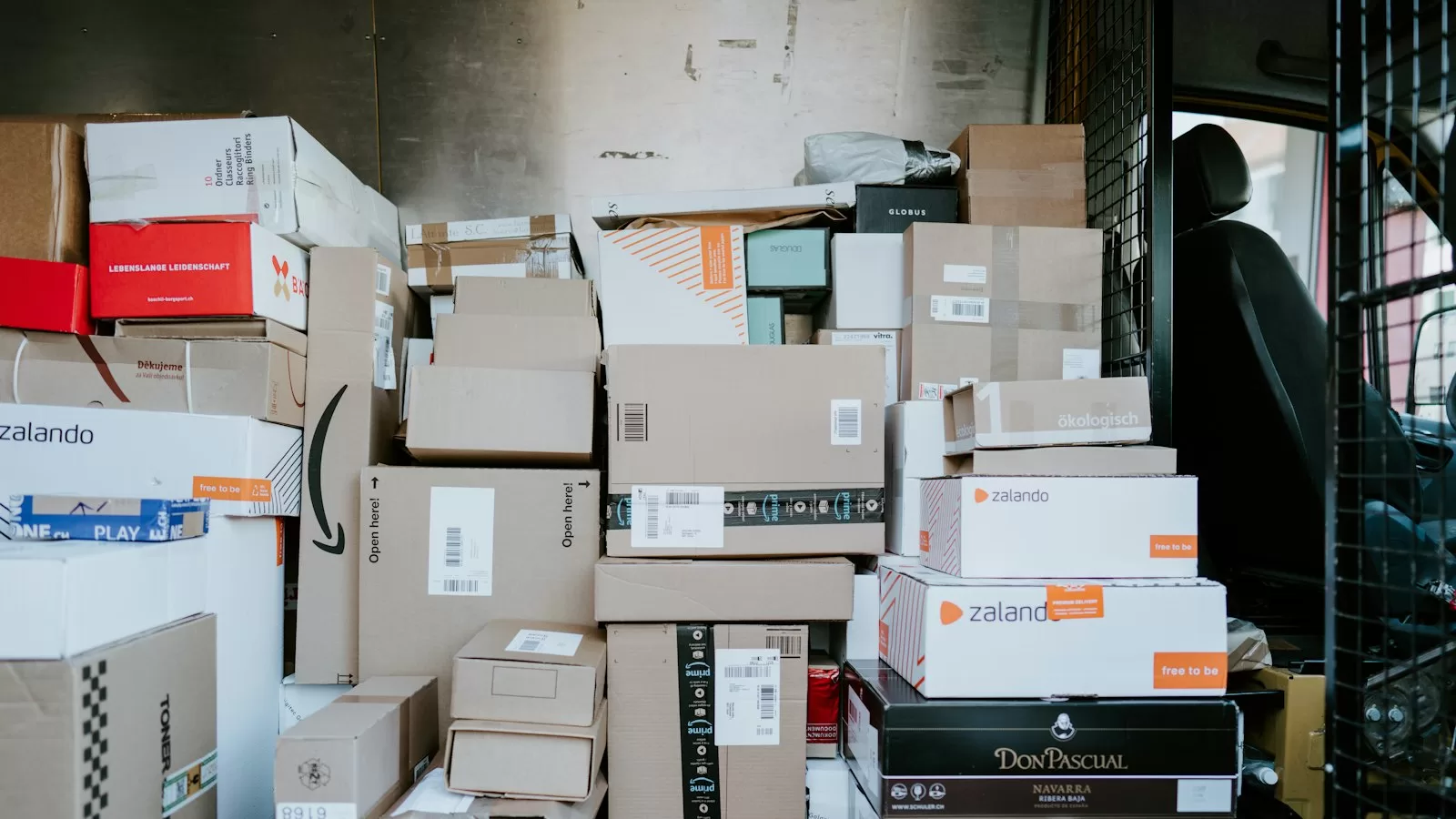
Since 1 November 2026, every type of item sold online to a consumer in the European Union from outside the EU pays a customs handling fee of 2 euros, plus VAT. This comes on top of the 3 euros of customs duty that consignments up to 150 euros have paid since 1 July. On the same day, the customs declarations for those consignments started having to identify each product with its own codes and, without them, the parcel can be sent back to origin.
For people buying on Temu, Shein or AliExpress, this is news about price, and the press treated it that way. For a Portuguese online shop, it is a business decision that depends on one question: where do the goods leave from when the customer clicks "buy"?
A note first: we are not customs brokers, accountants or lawyers. We explain the published rules and what they change in an online shop; confirm how they apply to your case with your customs broker or accountant.
What changed on 1 November 2026
In short: all distance sales of imported goods to consumers in the EU pay a customs handling fee of 2 euros per item, whatever the value of the consignment, and consignments up to 150 euros now require product identifiers in the customs declaration.
| Rule | What it says |
|---|---|
| Temporary customs duty | 3 € per item on consignments up to 150 €, from 1 July 2026 until 1 July 2028 (Regulation (EU) 2026/382) |
| Customs handling fee | 2 € per item, at any value, from 1 November 2026 with no end date (Regulation (EU) 2026/2108 and Delegated Regulation (EU) 2026/2152) |
| Product identifiers | Mandatory per item on consignments up to 150 €, from 1 November 2026 (Delegated Regulation (EU) 2026/1022) |
| VAT | Still due on the purchase and also charged on the fee and the duty |
The rules and figures are in the European Commission's guidance on the 3 euro duty and the handling fee (version of 5 October 2026) and on the EU customs reform page. CTT, the Portuguese postal operator, confirms the application in Portugal on its customs clearance page, updated on 20 October, and the entry into force on 1 November went ahead with no last-minute changes.
Two details change the maths.
"Item" is not a piece or a box. It is each line of the customs declaration: products with the same tariff classification, the same description and, where requested, the same origin. In the examples published by CTT, three identical t-shirts pay 3 € of duty and 2 € of fee (plus VAT); one t-shirt and one pair of shoes pay 6 € and 4 € (plus VAT). Add VAT on the purchase and, if nothing was paid at checkout, the carrier's clearance service.
The fee does not come back. According to the Commission's guidance, from the moment the customs declaration is accepted, the 2 euros are due, even if the goods are not released or are returned. A parcel refused by the customer at the door does not recover the fee.
Who pays, in practice
The law makes whoever declares the goods to customs responsible: the platform, the seller, the carrier or a representative. In practice, whoever pays first passes the cost on to someone.
CTT explains the result from the customer's point of view: if the duty, the fee and VAT are not charged at checkout, they are charged on arrival in Portugal, before delivery. There is a worse case: if only VAT was paid at checkout, CTT says it cannot charge the duty to the recipient or submit the customs process, and the parcel is returned. This is where the same rule produces opposite effects in different shops.
Situation 1: your shop sells from stock in Portugal or another EU country
For orders to customers in the EU, nothing changes on the customs side: a sale from Braga to Madrid does not go through customs.
What changes is the comparison. A customer who buys three different items from a seller outside the EU pays, on top of VAT on the purchase, 9 € of duty and 6 € of fee, plus VAT on both and the clearance service, if none of that is charged at checkout. Your shop does not carry that cost.
Nobody yet knows how many customers will change their habits. What is known is that the cost difference exists and that the customer only values it if they see it before paying. A phone accessories shop in Leiria, or a homeware shop in Viseu, can make that clear in four places:
- On the product page, next to the price: "Shipped from Portugal. No extra charges on delivery."
- At checkout, with the real delivery time and the final cost, no surprises.
- On the shipping and returns page, with a direct answer to "will I pay customs?".
- In the Google Merchant Center shipping data, so that delivery time and cost also appear in shopping results (we explained how to keep products visible on Google in free Google Shopping listings have ended in Europe).
A page that says this explicitly also gives AI assistants an answer to quote when someone asks where to buy without paying customs. One caution: say what your shop offers, not what others charge.
Situation 2: your shop ships directly from suppliers outside the EU (dropshipping)
This is where the change weighs most. If the product leaves China, the United Kingdom, the United States or Turkey directly for your customer in Portugal, it is a distance sale of imported goods. Each consignment up to 150 € pays 3 € per item of duty and 2 € of fee, plus VAT; above 150 €, it pays the normal tariff duty and the same 2 € per item.
A hypothetical example. A pet accessories shop with Asian suppliers has an average order of 35 €, with two types of item. Since 1 November, that order carries 10 € of customs charges before VAT, almost 29% of the sale value. If that cost is not in the price or at checkout, it shows up at the customer's door.
And in the worst way: the customer refuses the parcel, the fee is not refunded, the goods go back to origin and the shop's rating suffers.
Then there are the identifiers. For consignments up to 150 €, the declaration carries three codes per item:
- M-PID (merchant product identifier): the code the shop or platform gives the product. In your shop, usually the SKU or the variant ID.
- NS-PID (non-standardised manufacturer identifier): the manufacturer's or supplier's reference, such as the model number.
- S-PID (standardised identifier): a code such as the EAN or GTIN, where one exists. If none exists, an exception code is used.
According to the Commission's guidance, the codes identify the product model, not the batch, and whoever declares is responsible for the accuracy of the data.
Questions to ask your supplier, your carrier and your accountant:
- Who is the declarant for my orders, and do they use the Import One-Stop Shop (IOSS)?
- Are the duty, the fee and VAT charged at my checkout or to the customer on arrival?
- Does the supplier send the three identifiers for each product to the carrier?
- How much does my average order now cost, counting the types of item?
- Is it worth importing stock to Portugal and selling from here?
The last question deserves serious sums. A bulk purchase made by the company is not a distance sale: it pays neither the fixed 3 euros nor the handling fee, but the normal tariff duty and import VAT; in return, it requires capital tied up in stock and inventory management. From July 2028, the new Customs Code also provides for a customs warehouse for distance sales, with a lower fee whose amount has not been set. If the question is between platforms, we wrote about Shopify or your own shop.
Situation 3: your company buys from suppliers outside the EU
If your company buys goods or materials from suppliers outside the EU, for resale or its own use, the 2 euro fee is not your problem: it applies to distance sales to consumers, and the Commission's guidance says business-to-business flows are, in principle, outside the identifier obligation.
There is, however, a change that CTT points out and that went unnoticed: business purchases up to 150 € also lost their duty exemption on 1 July, but they do not pay the fixed 3 euros; they pay the normal tariff duty, plus VAT. Above 150 €, nothing changed.
The point to watch is how the purchase is made. According to the guidance, the absence of a VAT number on the declaration signals to customs a distance sale to a consumer. An order placed on a consumer platform, without company details, may be treated as a private purchase and pay the 2 euros. Confirm with your supplier and accountant how your purchases are being declared.
Your catalogue is now customs information
Until now, the EAN and the manufacturer's reference were fields many shops left blank. For anyone selling from outside the EU, they are now a condition for the parcel to arrive.
Platforms have adapted. According to the Shopify changelog of 24 October, shipping labels to the EU through Shopify Shipping and Managed Markets now require the identifiers, and products gained an option to declare that no standardised code exists. eBay asked sellers outside the EU to update their listings with the same codes.
Even if your shop sells only from Portugal, it is worth organising these fields now, because they serve more than customs:
- One unique SKU per variant (size, colour), which does not change over the product's life.
- The manufacturer's reference for each product.
- The EAN or GTIN, where it exists, which Google Merchant Center, marketplaces and price comparison sites use to identify the product with certainty.
- The tariff code (HS), if you import or sell outside the EU.
When this data lives in different places (the supplier's spreadsheet, the invoicing system, the shop), every change multiplies errors. Connecting those systems is done once and serves every channel.
The mistake to avoid
The most common mistake is to think this is a problem for the Asian platforms. For anyone dropshipping from outside the EU, it is your shop's problem, since 1 November. For anyone selling with stock in the EU, it is an advantage that only exists if you tell the customer.
The second mistake is adjusting prices in silence. If the shop now charges the fees at checkout, or takes longer because it changed supplier, say so on the shipping page and to customers. Less than two weeks from Black Friday (we covered the preparation in Black Friday 2026: how to prepare your shop), a customer surprised at the door is a customer who does not come back.
How Digito helps
If your shop sells from suppliers outside the EU, or has stock in Portugal and does not yet say so clearly, we can review the catalogue, the shipping page and the checkout, and show what to change before Black Friday. It is the kind of work we do in online shops and e-commerce and, when product data is scattered across several systems, in custom software and integrations. If you are still planning the shop, start with the list of what you need to sell online in Portugal.
Talk to us at digitosolutions.com.
Sources
- European Commission, guidance The temporary EUR 3 customs duty and the Union handling fee, version of 5 October 2026 (2 € fee per item at any value with no end date; definition of distance sale and VAT number; declarant; no refund; M-PID, NS-PID and S-PID identifiers; scope up to 150 €; business-to-business flows excluded)
- European Commission, EU Customs Reform page (news item of 7 October 2026; Regulations (EU) 2026/2108, 2026/2152, 2026/382 and 2026/1022)
- Access2Markets, EU applies customs duty of 3 euros per item to low-value e-commerce consignments, 30 June 2026
- CTT, End of customs duty exemption on purchases up to 150 euros from outside the European Union, updated 20 October 2026 (calculation examples; charging on arrival; return when only VAT was paid; business purchases up to 150 € no longer exempt)
- Diário de Coimbra, New 2 € fee on non-EU parcels, 5 November 2026 (entry into force; positions of DECO and BEUC)
- Shopify Changelog, New EU product identifiers supported on Shopify Shipping and Managed Markets labels, 24 October 2026; Shopify Community (dev), About EU new barcode requirements, October 2026
- eBay Community, EU customs update: new product identifier requirements